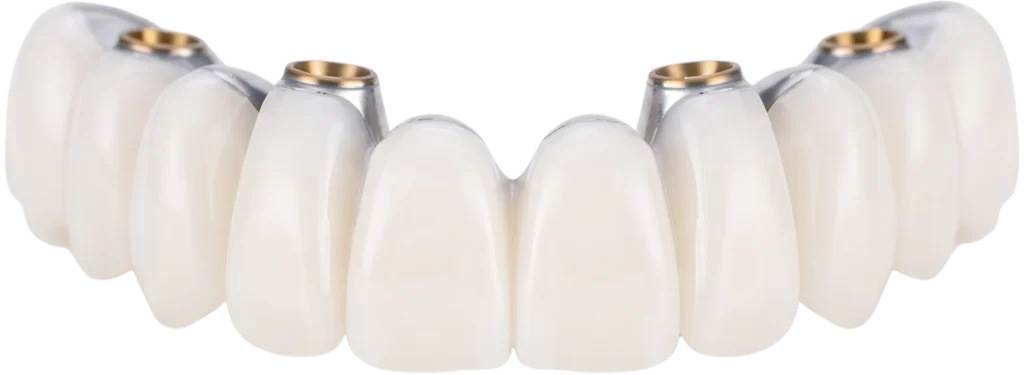
FP1 Zirconia teeth for All-On-4 Dental Implants

FP1 Full-Arch Dental Implants

All-On-4 & All-On-X Without The Artificial Gum Line

What is an FP1 Prosthesis?

An FP1 prosthesis replaces your teeth. Only your teeth.

That sounds obvious until you see what most full-arch implant restorations actually look like. The standard All-On-4 or All-On-X restoration is a single curved bridge that includes both the teeth and a section of artificial pink gum tissue. It's a proven, predictable solution — but it is a prosthesis that sits on top of your gum line rather than emerging from it.

An FP1 restoration does the opposite. Each tooth rises out of your own gum tissue, with your own natural contours and papillae between them. There is no pink material. There is no seam. There is nothing to position out of sight when you smile, because there is nothing to hide.

The Classification Behind the Name FP1

"FP1" comes from the prosthodontic classification system developed by Dr. Carl Misch, which categorizes full-arch restorations by how much structure they replace:

  • FP1 — Fixed. Replaces the crown of the tooth only. Looks just like natural teeth.
  • FP2 — Fixed. Replaces the crown and part of the root, producing slightly elongated teeth.
  • FP3 — Fixed. Replaces the crowns and the gum tissue, using pink acrylic or pink zirconia.
  • RP4 / RP5 — Removable implant-supported or implant-and-tissue-supported overdentures.

Nearly every full-arch dental implant case performed in the United States today is an FP3. That isn't an accident, and it isn't a shortcut.

Why FP3 Became the Standard

When a patient has worn dentures for years, or has lost significant bone to advanced periodontal disease, the ridge that once held their teeth has resorbed. The gum line has receded. The papillae are gone. In those cases, pink prosthetic material is the right answer — it restores the tissue that is no longer there, supports the lips and cheeks, and produces a result that looks natural precisely because it replaces what was lost.

FP3 is also more forgiving. It requires fewer implants, tolerates greater bone loss, and gives the surgeon more room to work with.

FP1 offers no such margin. It requires bone that is still there, tissue that is still healthy, and a surgical plan precise enough that the final teeth emerge exactly where natural teeth would have. That's what makes it the more refined result — and the more selective one.

FP1 vs. FP3 Comparison

Side-by-side comparison of an FP1 zirconia prosthesis without artificial gum tissue and an FP3 prosthesis with pink gingival material.
FP1 vs. FP3 Full-Arch Prosthetics
  FP1 FP3
Artificial gum line Yes — pink zirconia or acrylic
Bone reduction (alveolectomy) Typically required
Implants per arch Typically 4–6
Lip & facial support Artificial gums restore lost facial volume
Bone requirement Tolerates significant bone loss
Visible transition line Possible with a high smile line
Investment Standard full-arch

It all comes down to one thing: bone

An FP3 is thick — it holds the teeth and the gum tissue. Making room for it means reducing the height of your jaw ridge, usually by several millimeters. That’s standard, accepted, and permanent.

FP1 skips that step entirely. Your ridge stays intact. Your natural gum contours stay intact. That single difference drives every other line in the chart above — the implant count, the hygiene, the repairs, and the fact that there’s no transition line to hide.

Neither option is better in the abstract. FP3 is the right call for most full-arch patients, particularly anyone who has already lost significant bone. FP1 is the right call for a smaller group — and whether you’re in it comes down to what your jaw looks like today.

Your Other Full-Arch Tooth Replacement Options, Compared

Full-arch tooth replacement isn’t a single procedure. It’s a tiered list of options, and FP1 sits above the rest. Here’s where each option falls.

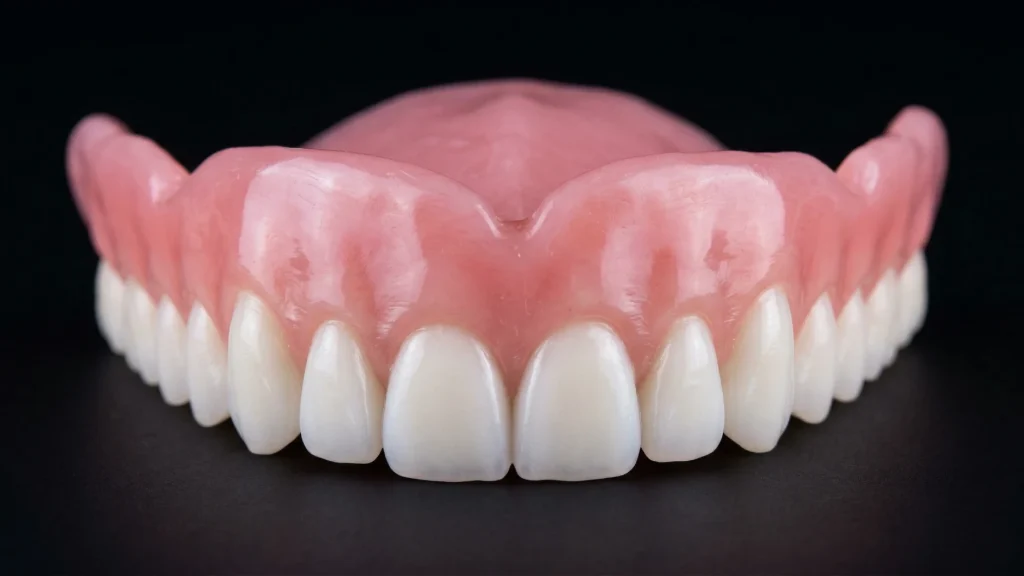
Traditional denture sitting on black background
Option 1 – Removable, Gum-Supported

Traditional Dentures

Removable, sits on the gums, held by suction or adhesive. No implants, which means nothing stimulates the bone underneath — so the ridge continues to shrink year after year, and the denture that fit last year fits worse this year. It's the least expensive option and the least stable one.
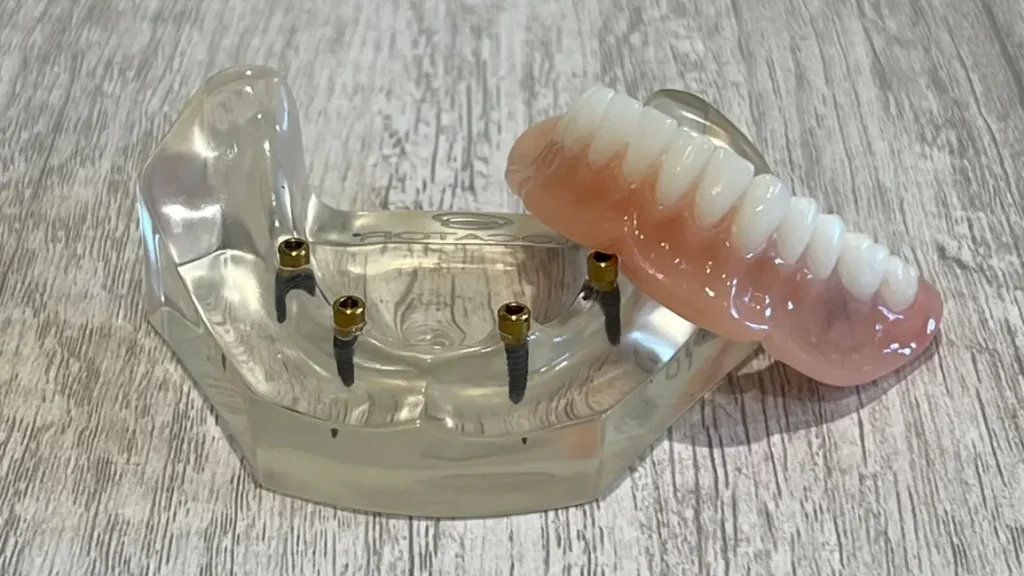
Option 1 – Removable, Gum-Supported
Implant-supported overdentures
Option 2 – Removable, Implant-Retained

Snap-In Implant Dentures (Overdentures)

Snaps onto two to four implants. Far more stable than a conventional denture, but it still comes out at night and still rests partly on your gum tissue.
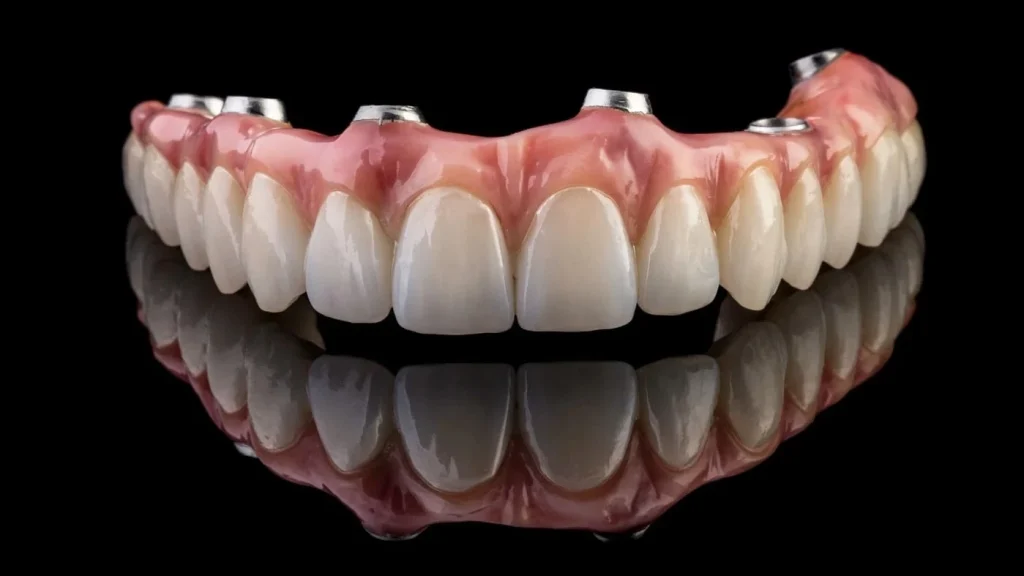
Option 2 – Removable, Implant-Retained
All-On-6 zirconia dental implant prosthesis
Option 3 – Fixed, Implant-Supported

Full-Arch Bridge With Pink Gums (FP3)

A fixed, full arch of teeth supported by 4-6 dental implants. The new teeth include an artificial gum line that replaces part of your natural gum line.
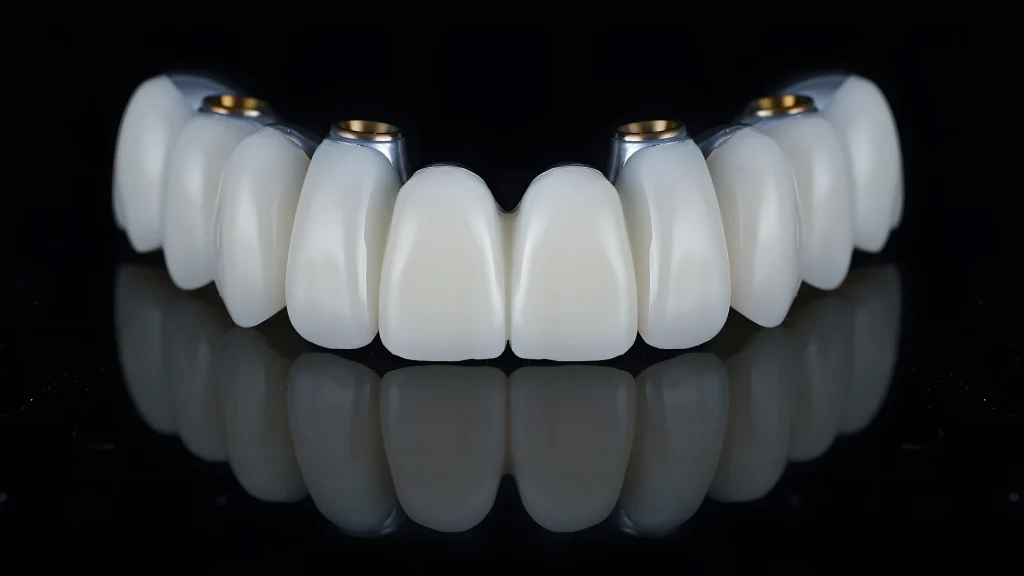
Option 3 – Fixed, Implant-Supported
FP1 zirconia teeth for all-on-4 dental implants in Columbus, OH
Option 4 – Fixed, No Artificial Gums

Full-Arch FP1

Individual teeth emerging from your own gum tissue on six to eight implants. No pink material, no bone reduction, no transition line — the look of individual implants without the surgical burden.

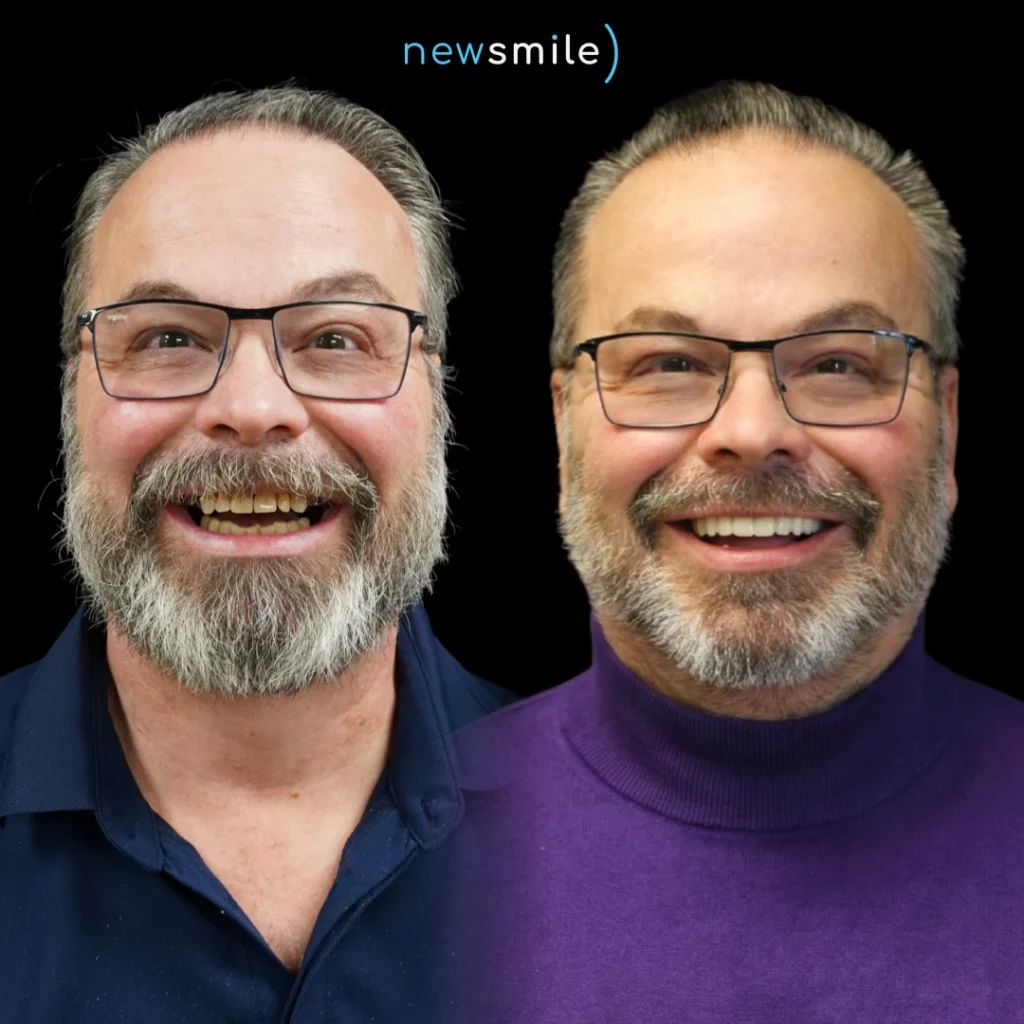
Option 4 – Fixed, No Artificial Gums

Are You a Candidate For FP1?

FP1 vs FP3 prosthetic for All-On-4 dental implants in Columbus, OH

FP1 has a narrower window than most implant procedures, and the reason is simple: it works with the bone and tissue you already have. There’s no pink material to compensate for what’s been lost, and no bone reduction to create space. What’s there has to be enough.

That makes timing the single biggest factor. The best candidates are usually people who still have teeth — failing teeth, painful teeth, teeth they’ve been told need to come out — but whose jaw is still largely intact.

FP1 May Be Right For You

FP3 May Be Right For You

If you’re in the second group, that isn’t a downgrade. A well-planned FP3 will give you a fixed, permanent, natural-looking result — and for patients with significant bone loss, it will give you a better result than FP1 could.

But there’s no way to know which group you’re in from a photo, a phone call, or a website. It takes a 3D scan. The scan shows exactly how much bone you have, where it is, and whether an FP1 can be supported without compromise — and it’s the only honest way anyone can answer this question for you.

The Benefits of FP1 Full-Arch Implants

The differences on paper are technical. Here’s what they actually feel like.

Nothing to Hide When You Smile

There's no seam where a prosthesis meets your gums, because there's no prosthetic gum at all. Smile as wide as you want – there's no line to keep out of sight.

Your Own Bone, Preserved

Nothing gets flattened or reduced to make room. The ridge that has held your teeth your whole life stays exactly as it is.

Room to Talk and Taste

There's far less material in your mouth than a conventional bridge requires. Most patients speak normally within days and never feel like something is in the way.

They Feel Like Your Own Teeth

Your tongue meets your own gum tissue, not a shelf of acrylic or zirconia. It's the difference between wearing something and simply having teeth.

While FP3 is a great option, FP1 is the only technique that offers all of these benefits.

Real Results From Actual Patients

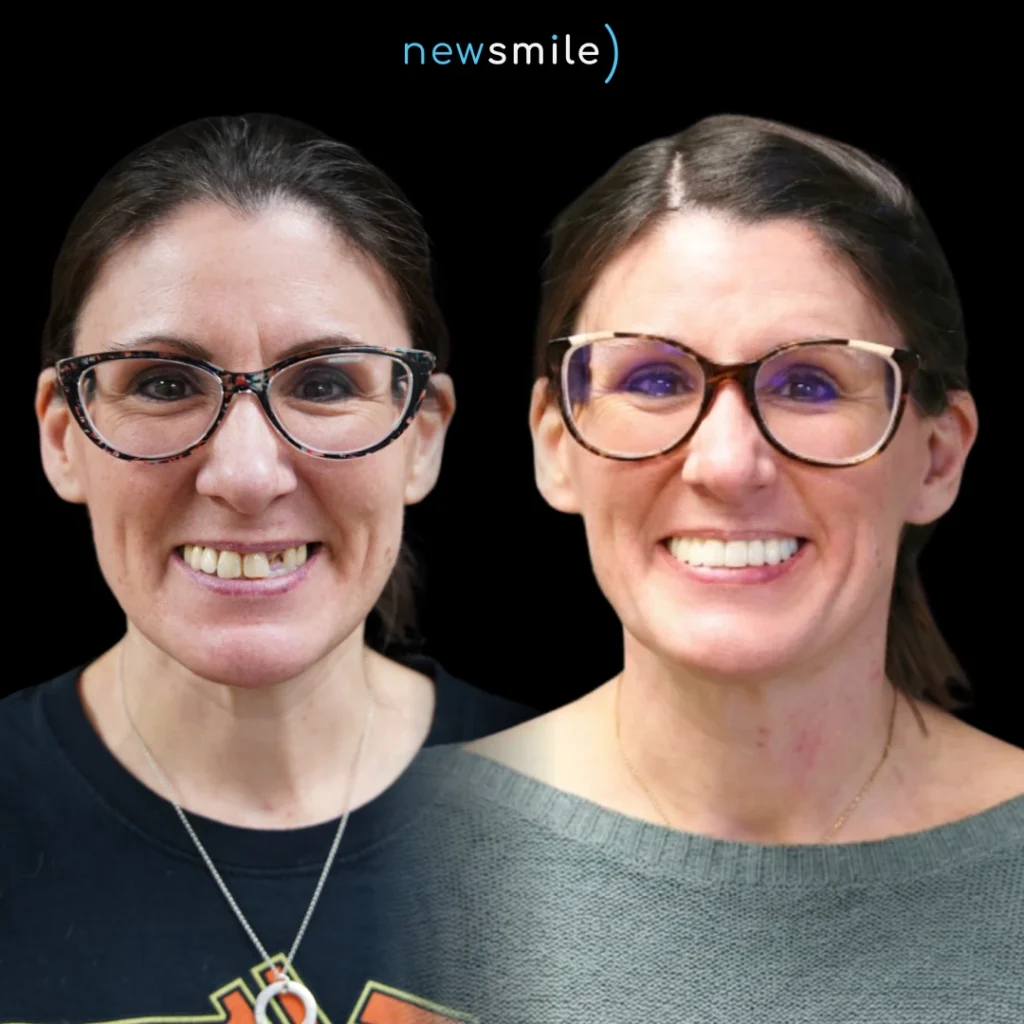
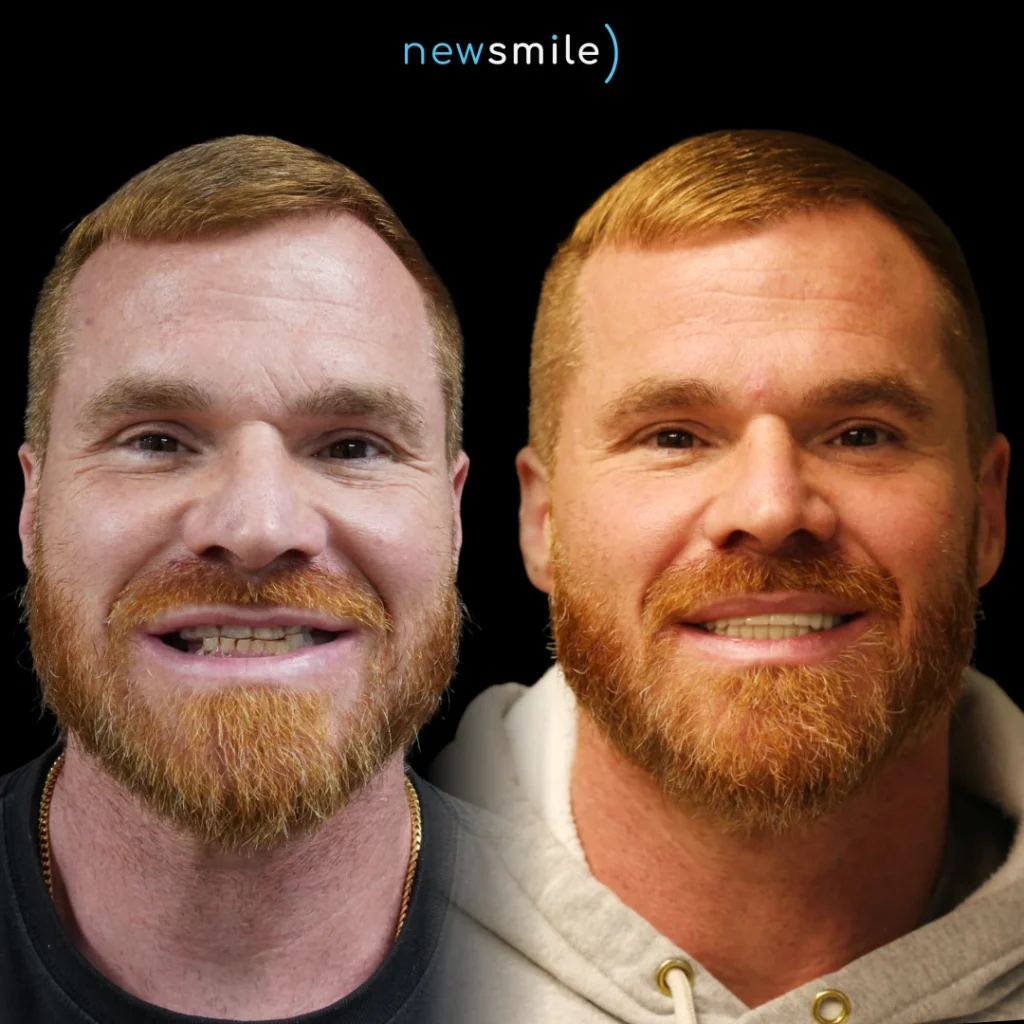
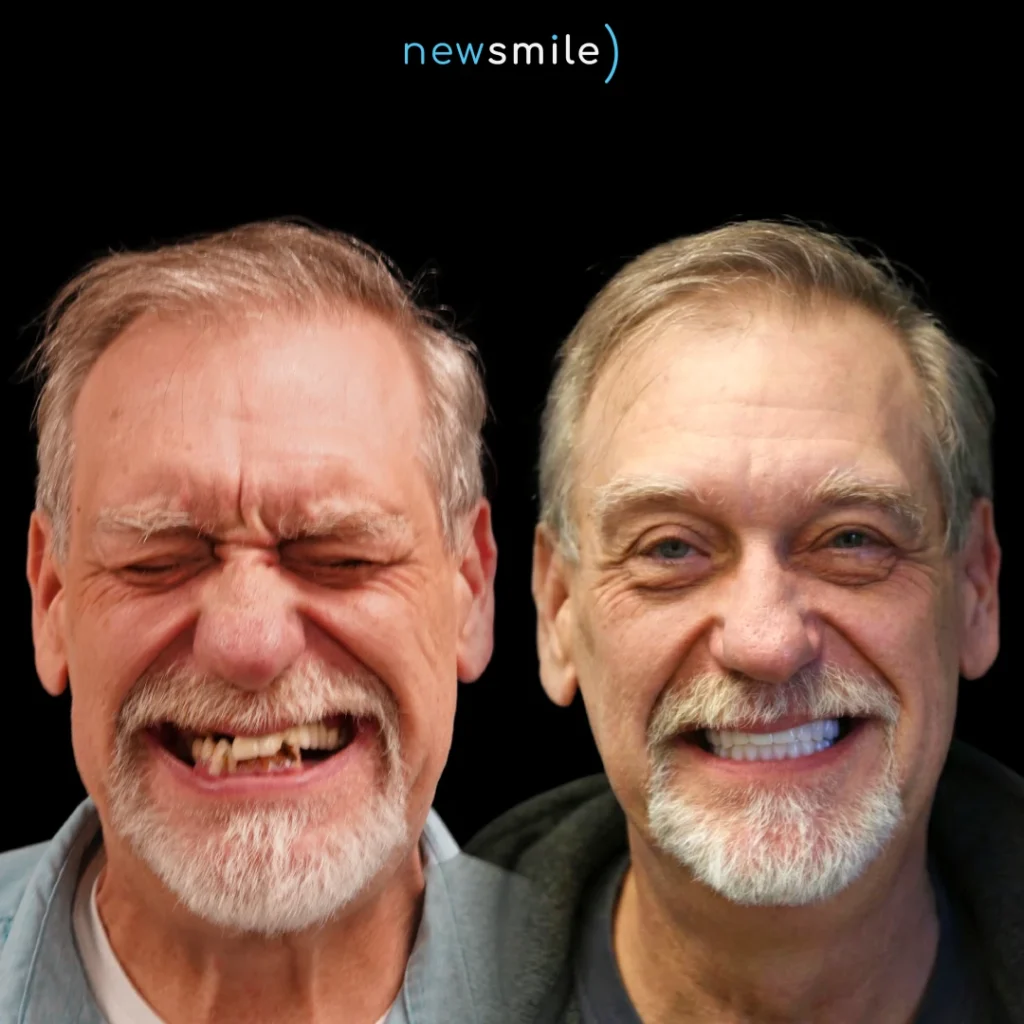
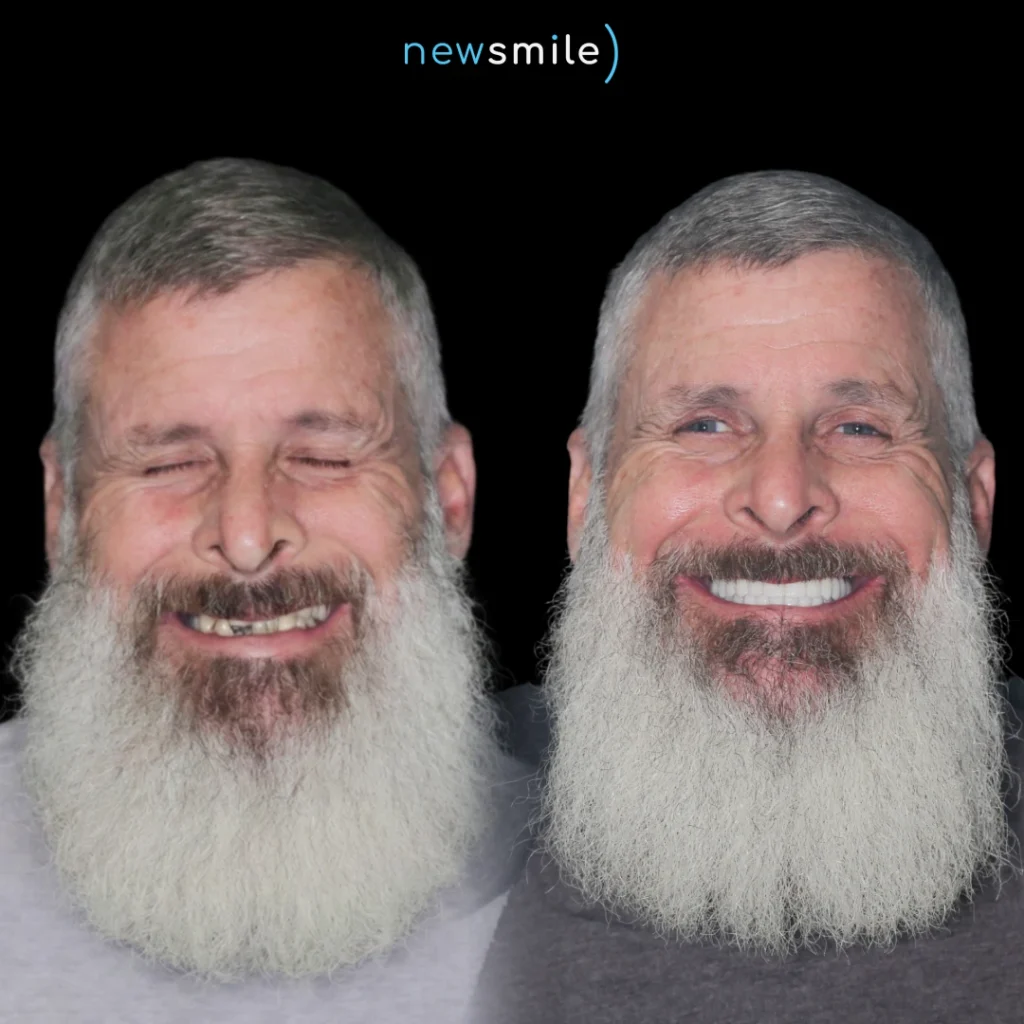
Every case on this page was treated here. No stock photography, no lab renderings.
Each one was planned and performed by Dr. Evan Pivetz.

Before and after dental implants in Columbus, Ohio at New Smile Columbus Dental Implant Studio

Already Been Quoted for All-On-4?

If another practice has recommended a conventional full-arch bridge, it’s worth knowing whether you qualify for FP1 before bone is reduced. That decision can’t be undone.

FP1 Full-Arch Implant Cost

FP1 costs more than a conventional full-arch restoration. It requires more implants, more planning, more surgical precision, and a lab process that isn’t comparable to a standard FP3.

At New Smile Columbus Dental Implant Studio, FP1 typically runs $20,000 to $25,000 per arch, depending on how many implants your case requires and whether grafting is part of the plan. There is a cost savings when you do both arches at the same time, and your consultation will include an exact figure — not a range — before you commit to anything.

Here’s what that actually covers:

What's Included?

A Smile Built to Last a Lifetime.
We Guarantee It.

FP1 Zirconia teeth for All-On-4 Dental Implants

Our All-On-4 / All-On-X zirconia restorations are crafted with precision, designed to your exact specifications, and built to stand the test of time. We’re so confident in our work that we back every restoration with a limited Lifetime Warranty — because a permanent smile should actually be permanent.

If it ever falls short, we make it right. Simple as that.

Financing Options

Most patients finance some or all of their treatment. We work with several lenders offering extended terms and low or no-interest options for qualified applicants.

Frequently Asked Questions

FP1 Full-Arch Implants Columbus, Ohio

Am I Too Old For Dental Implants?

How Long After Dental Implants Can I Eat Normally?

Can Dental Implants Fix Bad Breath?

Snap-In Dentures vs. All-On-4 Dental Implants

Are Dental Implants Painful?

Can You Finance Dental Implants?

What does FP1 mean in dental implants?

FP1 is a classification for a fixed full-arch restoration that replaces only the crowns of your teeth — no artificial gum tissue. The teeth emerge directly from your own gum line, the way natural teeth do. It’s the most natural-looking full-arch option available, and the most selective.

FP3 includes pink prosthetic gum tissue; FP1 does not. That difference changes the surgery: FP3 requires reducing the height of your jaw ridge to make room for the thicker prosthesis, while FP1 preserves your bone as it is. FP1 also typically requires six to eight implants rather than four to six.

3-On-6 is a branded name for an FP1 delivered in segments rather than as one piece. FP1 describes what the prosthesis replaces – the teeth only, with no artificial gum line. 3-On-6 describes how it’s built: six implants supporting three separate bridges that together form a full arch.

The practical difference is segmentation. A one-piece arch has no junctions between sections and distributes bite force across every implant at once. A segmented arch lets one section be removed or replaced without disturbing the other two, and smaller spans are easier to fit precisely.

Segmentation does introduce one tradeoff. Because each bridge needs support at both ends, the implants at adjacent bridge ends sit closer together than they otherwise would. Crowded implants share less bone between them, which can make them more vulnerable over time.

Neither approach is better in the abstract. The right one depends on your bone volume, your bite, and how your case is planned.

FP1 has narrower candidacy requirements and a more demanding workflow — guided implant placement, digital planning, and a lab equipped to mill individually contoured teeth without pink material. Many practices don’t offer it, so it doesn’t come up. It also isn’t the right choice for patients who’ve already lost significant bone.

Usually not without grafting, and sometimes not at all. Dentures don’t stimulate the jawbone, so the ridge shrinks steadily over time. Once enough bone is gone, individual teeth would look unnaturally long, and FP3 produces the better result. A 3D scan is the only way to know where you stand.

Grafting can often build back enough volume to support an FP1, though it adds surgery, cost, and healing time to your treatment. Whether it’s worth it depends on how much is needed and what your goals are. If grafting isn’t realistic for you, FP3 remains an excellent option.

Typically six to eight per arch, compared to four to six for a conventional full-arch bridge. Because there’s no bulky prosthesis distributing force across the arch, support has to come from the implants themselves. Your exact number depends on your bone volume and bite.

Longer than FP3 full-arch treatment. FP1 is usually staged over several months, allowing implants to integrate and any grafted bone to mature before final teeth are made. You’ll wear a temporary restoration throughout — you won’t be without teeth at any point.

A single piece of milled zirconia, one of the strongest materials in dentistry. It has no joints to loosen and no seams to fail. Each tooth is individually contoured and shaded, then milled from one solid block and finished to match the emergence of natural teeth. Often times, the zirconia prosthesis is reinforced with a titanium bar for additional rigididy and durability.

Yes. Our Limited Lifetime Warranty covers the zirconia arch against cracks and fractures for life — no deductible, no service fee, and no limit on covered repairs.

Daily cleaning at home, professional hygiene visits at the interval your care team recommends, and a nightguard if one is prescribed. Grinding and clenching are the leading causes of zirconia fracture, so nightguard wear matters more than most patients expect — and it’s a warranty requirement.

The zirconia arch is built to last decades and is covered for life against cracks and fractures. The implants supporting it are a separate matter, dependent on your bone health, hygiene, and habits — smoking and vaping in particular affect long-term implant stability.

Yes. More implants, more planning time, guided surgery, and a more demanding lab process all add cost. Grafting, if you need it, adds more. Your consultation will include an exact figure for your case rather than a range.

Get Your New Smile Now.

Your new smiles starts with a FREE Consultation. We can see you in just 1-2 days!

Download our Dental Implant Info & Pricing Guide!